PRINT. The Renewable Way Businesses Communicate
At Quick Reliable Printing, our core values and mission are centered around the environment, community support, and charity. Our commitment to Environmental, Social, and Governance (ESG) principles makes us a top choice for brands that care about sustainability.
Notably, two-thirds of the fiber we use in our paper comes from sources other than freshly cut trees. Specifically, one-third is derived from wood chips and sawmill scraps, another third from recycled paper, and the final third from “new growth” trees. Contrary to popular belief, paper mills do not harvest old-growth forests for paper production. Instead, nearly all the wood used in making paper comes from “tree farms”—areas planted with trees as a renewable crop, much like broccoli or wheat.
Print is a tangible and effective way to convey your message, and when recycled, it can be transformed back into paper, continuing the cycle of sustainability.
Serving Businesses
Since 1979
Paper Recycled
1900+ tons
Questions? Contact us!
For immediate assistance, call 989-496-2955
Other inquiries may be submitted via email to info@qrp.ink. We will respond promptly.
Environmental, Social, and Community
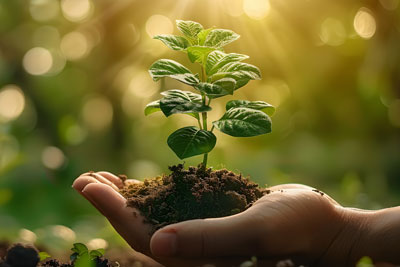
Green initiatives
QRP has been providing innovative green solutions long before “being green” became a popular concept. Over the years, we have consistently led the industry by managing our business in a friendly, positive, and thoughtful manner that positively impacts the environment.
We manufacture our products using the most environmentally sustainable raw materials available. Our commitment is to leverage our resources, strengths, and technologies to serve our communities and customers effectively.
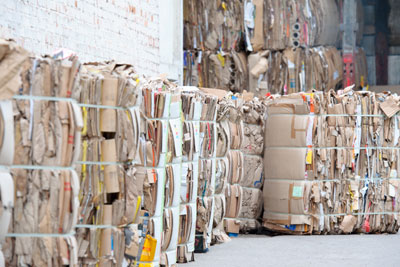
Paper Recycling
The paper industry plants more trees than it harvests, and today, there are 25% more trees in the developed world than there were in 1900. Paper is biodegradable, renewable, and sustainable. The growth and harvesting of trees create jobs, while forestry plantations contribute to clean air, clean water, wildlife habitat, and carbon storage. A decline in demand for paper products could lead to a decrease in the regrowth of sustainably managed forests. Additionally, all cardboard, paper, pallets, and packing materials are recycled.

Paper Sourcing
We source our paper from companies that harvest trees from sustainable tree farms, specifically planted, maintained, and replanted to provide a reliable supply of non-public paper pulp. These tree farms ensure a continuous availability of paper while keeping the land free from commercial development.
Every month, we recycle semi-truckloads of paper. While this process requires a significant amount of effort and resources, the revenue generated from buy-back programs only covers a small portion of our costs. However, we believe that this work is incredibly valuable and worthwhile.

Press Inks & Toner
We use recyclable and biodegradable inks that are cured using LED technology, which minimizes the need for harmful chemicals and other caustic substances. Our robotic ink feeding systems further decrease the consumption of materials and ultimately reduce waste. All spent solvents, inks, and oils are recycled appropriately.
Our digital presses do not utilize hazardous substances such as lead, cadmium, mercury, hexavalent chromium, PBBs, or PBDEs. As a result, our output is completely free of these dangerous materials and is low in volatile organic compounds (VOCs). Additionally, we employ a 100% Computer-to-Plate (CTP) workflow, meaning we use no chemicals in the processing of our printing plates.

Office Waste
We recycle empty toner and ink cartridges used by our office staff. Our office employs modern printers that are highly efficient, consume less energy, and feature eco-printing modes as well as other sustainability options. Additionally, all paper waste generated is included in our pressroom paper recycling program.
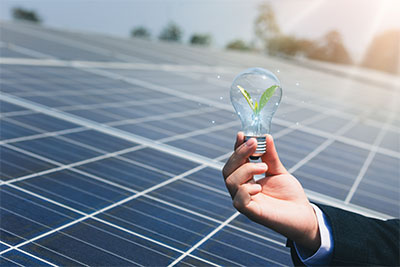
Facilities
We strive to minimize environmental risks by carefully selecting and designing materials, fixtures, facilities, technology and other infrastructure.
Our commitment includes using environmentally friendly heating, ventilation, and air conditioning systems, as well as continuously working to reduce our energy consumption and carbon footprint. The installation of LED light fixtures has resulted in significant energy savings in kilowatt-hours (kWh).

Online Ordering
Our digital storefront, online ordering, and customer proofing systems help us significantly reduce gasoline and other raw materials usage.
Overall, e-commerce has about 30% lower energy consumption and CO2 emissions compared to traditional methods.

Community
We are actively engaged in our community and collaborate with various causes, non-profits, local schools, and community organizations. We proudly sponsor a wide range of initiatives to ensure that the vibrancy and creativity of our community continue to thrive.
By partnering with us, you not only gain access to our top-notch printing services but also play a vital role in supporting the community.
Top 8 Printing Environmental Myths
Paper is destroying U.S. forests
U.S. forests are a renewable natural resource that are continuously replenished through sustainable forest management and natural regeneration. The areas harvested by paper companies are referred to as “managed forests.” Detailed models are developed to ensure that trees are harvested sustainably. For every tree that is cut down, several new trees are planted or allowed to regrow naturally, maintaining a stable environment.

Paper manufacturing uses excessive amounts of water
Papermaking uses significant amounts of water, but the production process consumes very little of it. Process water is recycled ten times or more and treated to meet strict U.S. water quality standards. Approximately 90% of the water is returned to its source, around 1% remains in the finished products, and the rest evaporates back into the environment.
Using paper products is wasteful
Paper is recycled more than any other product in the U.S. Recycling paper extends the supply of natural resources, such as wood fiber, saves space in landfills, and reduces greenhouse gas emissions (specifically methane) that are released when paper decomposes in landfills.
In 2021, 68% of paper-based packaging in the U.S. was recovered for recycling, with a remarkable recycling rate of 91.4% for corrugated cardboard.

Only recycled paper should be used
The ongoing supply of wood fiber from sustainably managed forests is crucial to the paper production cycle. According to the U.S. Forest Service, more than 4 million trees are planted in the United States every day. Of these, over 1.7 million are planted by the paper and wood products industry, excluding naturally regenerated seedlings.

Paper is a dying industry
The U.S. paper industry produces essential products that people use every day. It is also a major employer in the forest products sector, ranking among the top 10 manufacturing employers in 43 states. The industry employs approximately 925,000 individuals and supports over 2 million additional jobs throughout the supply chain. Furthermore, it makes a significant contribution to the U.S. economy, accounting for about 5% of the manufacturing GDP.

The paper industry produces greenhouse gases
The Environmental Protection Agency (EPA) notes that the pulp and paper industry accounts for less than 1% of total greenhouse gas emissions in the United States. Compared to other manufacturing sectors, such as electronics and telecommunications, the environmental impact of the wood pulp and paper industry is minimal.

Digital is always greener
Digital isn’t always the more environmentally friendly option. Digital devices and data centers have their own environmental impacts, including energy consumption and electronic waste. It’s not simply a case of choosing digital over paper; it’s important to consider the bigger picture and make informed decisions.
Paper is one of the few products on Earth with an environmentally sustainable, circular life cycle. It is made from a renewable natural resource—trees that are purpose-grown, harvested, and regrown in sustainably managed forests. The manufacturing process predominantly uses renewable, carbon-neutral bioenergy and, while it requires a significant amount of water, it consumes very little of it. Additionally, paper products are recycled more than any other material.

Packaging is wasteful
Paper-based packaging offers several advantages: it protects goods, reduces waste, is recyclable, and can help address issues of waste and overconsumption. While recyclable materials and the goal of achieving zero waste are crucial aspects of sustainable packaging, it’s misleading to think these are the only factors that matter. For instance, glass packaging highlights how an exclusive focus on recyclability can result in negative environmental impacts down the line. It is essential for environmentally conscious businesses and consumers to consider the entire life cycle of each packaging component.